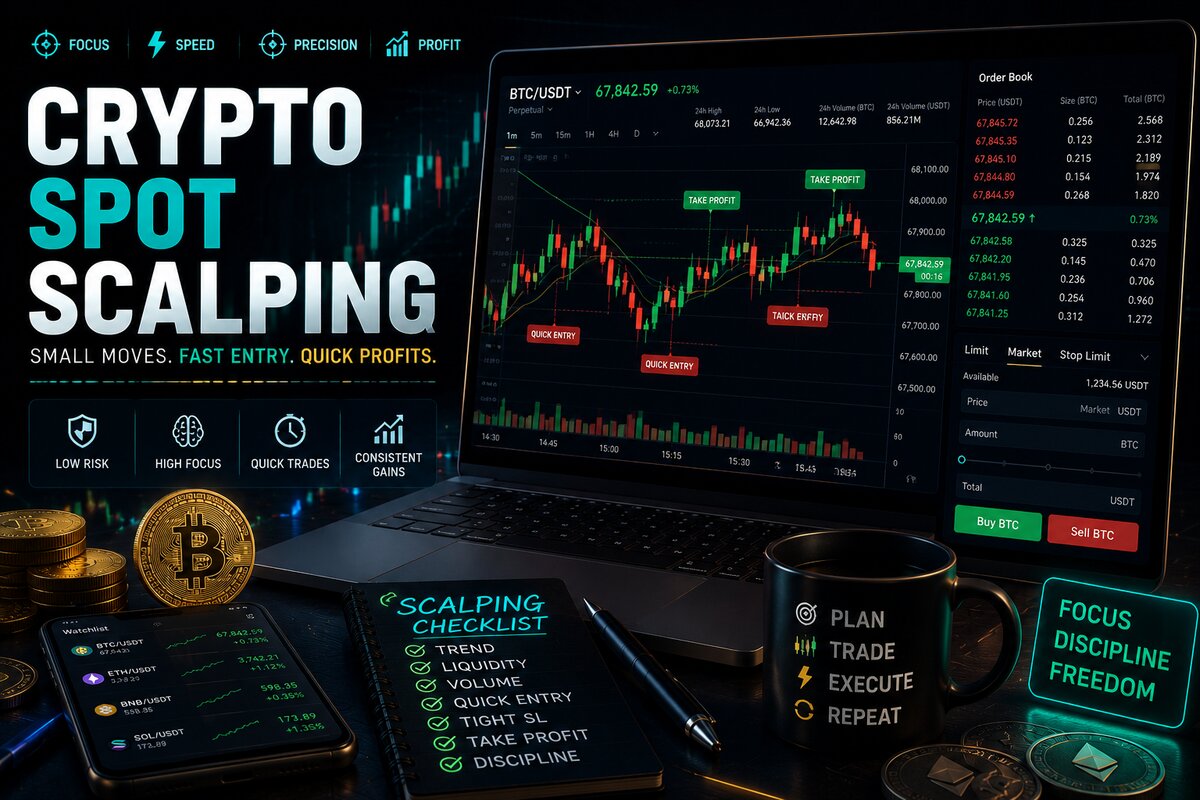
Scalping is one of the most talked-about — and most misunderstood — trading styles in crypto. Done right, it's a disciplined way to collect small, frequent profits. Done wrong, it's a fast way to burn through your capital in fees and bad decisions. Here's how it actually works.
The Core Idea Behind Scalping
Scalping means opening and closing trades within minutes, sometimes seconds, to capture tiny price movements — often less than 1%. Instead of waiting for a big move, a scalper aims to make many small wins that add up over a trading session.
Why Spot Trading Is the Right Place to Practice It
Spot trading means you're buying and selling the actual asset, not a leveraged contract. This keeps your downside limited to the money you put in — which makes it a much safer environment to learn scalping than leveraged futures, where small moves can wipe out your account.
The Tools a Scalper Actually Uses
- Short timeframes: 1-minute and 5-minute charts are common for spotting quick entries.
- Order book awareness: Watching buy/sell pressure helps anticipate short-term direction.
- Tight stop-losses: Because trades are fast, losses must be cut even faster.
- Low-fee exchanges: Frequent trading means fees add up — choosing the right platform matters.
A Simple Scalping Routine
A typical session starts by identifying a coin with healthy volume and visible short-term volatility. The trader watches for a clear entry signal — for example, price bouncing off a short-term support level — enters with a small position, and exits the moment the target is hit or the trade goes against the plan. No emotion, no "just a little longer."
Common Mistakes Beginners Make
The biggest one is overtrading — taking too many trades out of boredom or impatience rather than a real signal. The second is ignoring fees, which can quietly eat all your profits if you're not tracking them. The third is scalping with money meant for long-term holding, which leads to panic decisions.
Ready to Practice Scalping the Right Way?
My Crypto Trading course walks through real scalping setups, charts, and risk rules step by step — PKR 10,000/month.
View Crypto Course